The Retinol Miracle: The Gold Standard of Anti-Ageing Care
What retinol is, what it does in the skin and what the evidence says, plus the difference between retinol, retinal and bakuchiol and a step-by-step routine without irritation.
If fine lines on your forehead, crow's feet at the corners of your eyes or skin that is no longer as smooth as it used to be are on your mind, and you are wondering "should I start retinol, and how?", this article is for you. Retinol is one of the most researched ingredients in anti-ageing care, but also one of the most complained about when used incorrectly. We answered the questions the Devida skincare team hears most often. The answers are based on published clinical studies, reviews and European cosmetics regulation.
This article does not replace a medical diagnosis. If you are pregnant, planning a pregnancy or taking medication for a skin condition, talk to your doctor before starting a retinoid product.
What is retinol, and who belongs to the retinoid family?
Question: Are retinol and retinoids the same thing?
Answer: No. "Retinoid" is the general name for vitamin A derivatives. The molecule that actually acts in the skin is retinoic acid (tretinoin). The retinol and retinal (retinaldehyde) used in cosmetics are converted step by step into retinoic acid by enzymes in the skin. The more conversion steps there are, the gentler the effect and the lower the risk of irritation.
| Retinoid | Distance from retinoic acid | Where is it found? | Strength / irritation |
|---|---|---|---|
| Retinoic acid (tretinoin) | Directly active form | Prescription medicines | Strongest; irritation most common |
| Retinal (retinaldehyde) | One step | Cosmetics | Converts faster than retinol; generally well tolerated |
| Retinol | Two steps | Cosmetics | Moderate; well tolerated with proper build-up |
| Retinyl esters (palmitate, acetate etc.) | Three steps | Cosmetics | Gentlest; also the weakest effect |
According to a review, tretinoin is the most researched and most potent retinoid for anti-ageing, but irritation is also most common with tretinoin and tazarotene. Retinal and retinol are considerably less irritating (Mukherjee et al., Clin Interv Aging 2006).
Question: What does retinol do in the skin?
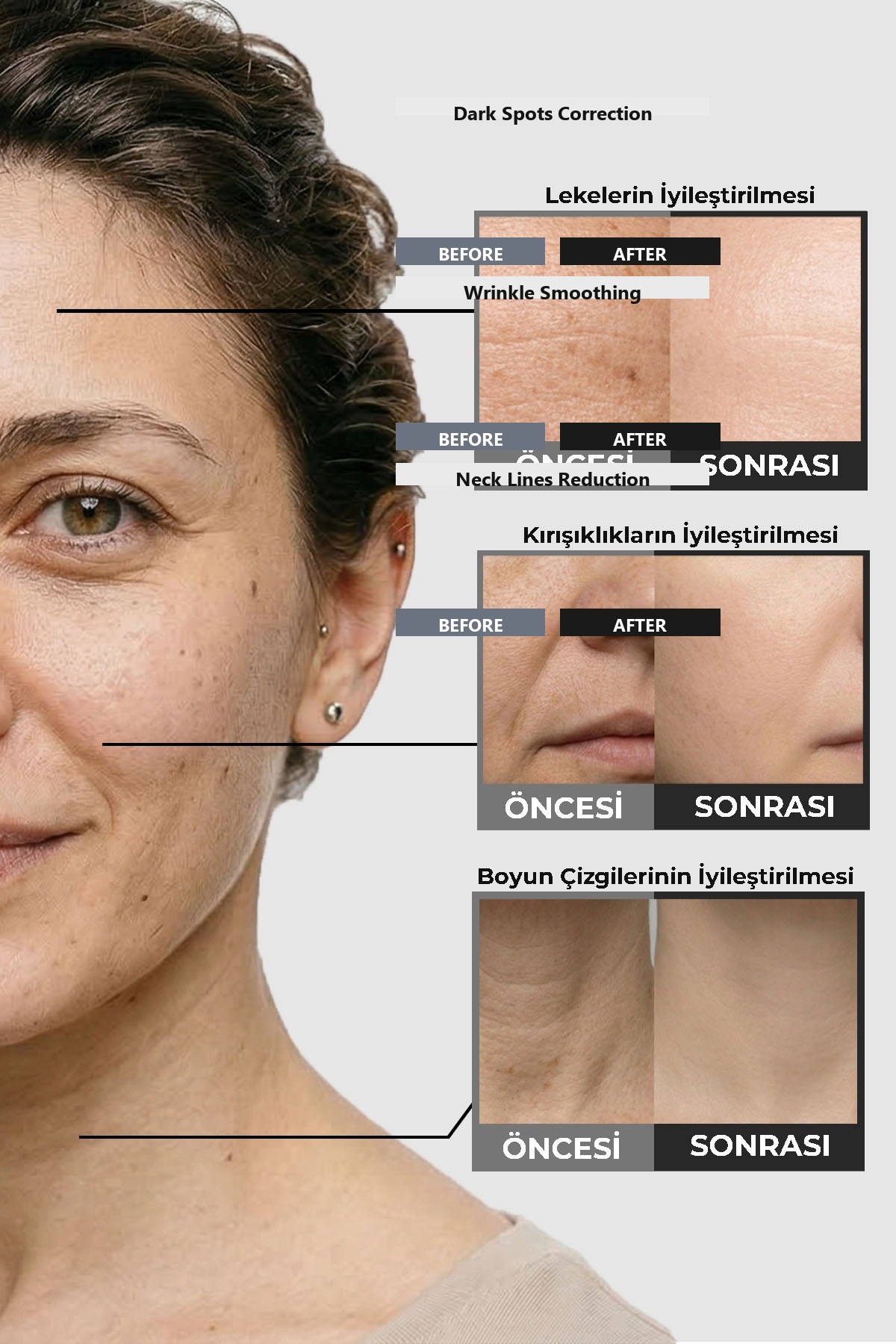
Answer: Once converted to retinoic acid, it binds to receptors in the cell nucleus and changes how certain genes work. The results: faster cell renewal in the upper skin, more collagen production in the dermis, suppression of the enzymes that break down collagen, and a more even distribution of pigment. In a study comparing retinoic acid and retinol, after four weeks both thickened the upper skin and increased collagen-related gene and protein levels; with retinol the changes went in the same direction but were smaller. In the same study, 12 weeks of retinol produced a significant reduction in facial wrinkles measured by image analysis (Kong et al., J Cosmet Dermatol 2016). Note: this study was conducted by a cosmetics company.
What does the science say? Clinical studies
Question: Has it really been shown that retinol reduces wrinkles?
Answer: Yes. In one of the most cited studies, participants with an average age of 87 had a 0.4% retinol lotion applied to one arm and a lotion without the active ingredient to the other for 24 weeks. Fine wrinkles improved markedly on the retinol side; skin biopsies showed increases in water-binding glycosaminoglycans and the collagen precursor procollagen I (Kafi et al., Arch Dermatol 2007). Two important details: most participants had mild irritation, and 23 of the 36 people who started completed the study.
Question: What is known about bakuchiol, often called an alternative to retinol?
Answer: Bakuchiol is a non-retinoid molecule obtained from a plant (Psoralea corylifolia). In a randomised, double-blind study of 44 people, either 0.5% bakuchiol twice daily or 0.5% retinol once daily was used for 12 weeks. Wrinkle area and the appearance of pigmentation decreased significantly in both groups, with no statistical difference between them; scaling and stinging were reported more often in the retinol group (Dhaliwal et al., Br J Dermatol 2019). The study is small, and the authors noted the results need to be confirmed by larger studies.
Question: Is the effect permanent?
Answer: No. Retinoids keep working for as long as you use them; when you stop, the gains gradually fade. So retinol should be seen not as a "course of treatment" but as a long-term step in your routine.
New concentration limits in Europe
Question: How much retinol can cosmetics contain?
Answer: European Commission Regulation 2024/996, based on the assessment of the EU Scientific Committee on Consumer Safety, set limits for retinol and its esters: maximum 0.05% retinol equivalent in body lotions and maximum 0.3% in face and other products. A "Contains vitamin A" warning also became mandatory on these products (BeautyMatter; Biorius). The reasoning is to keep total vitamin A intake, together with food and supplements, within safe limits; concentrations below the limit are considered safe.
Common myths
Question: Does peeling and redness show that "the retinol is working"?
Answer: No. In the first weeks, mild dryness, flaking or redness are common and decrease as the skin adapts; this is called "retinisation". But intense burning, swelling or constant redness are signs not that it is working, but that the skin is being pushed too hard. Irritation can also lead to new dark spots, especially on medium and darker skin tones.
Question: Does a higher percentage mean faster results?
Answer: No. Higher concentrations increase the risk of irritation, and irritation makes you stop using the product. A low-to-moderate product used consistently gives better results than a strong product you keep taking breaks from.
Question: Does retinol thin the skin?
Answer: This is a common belief, but studies show the opposite: retinoids thicken the upper skin (epidermis) and support collagen production in the dermis. The flaking in the first weeks is not thinning of the skin but faster renewal of surface cells.
Question: Is retinol only for older skin?
Answer: No. Retinoids are also used for acne, the appearance of pores and uneven tone. Most people start for anti-ageing purposes in their late twenties or thirties; but what matters more than the starting age is your skin's needs and consistent sun protection.
Step-by-step: how to use it correctly
Question: How should I start retinol?
Answer: The "low and slow" rule:
- First do a patch test behind the ear or under the jaw and wait 24–48 hours.
- Use it 2 evenings a week for the first two weeks, then 3–4 evenings a week for the next two. If your skin is comfortable, you can move to every evening.
- Apply only in the evening, on clean and completely dry skin, in the amount stated by the product.
- Apply very little to the corners of the eyes and lips and the nasal folds; these areas irritate more easily.
- Apply a moisturiser on top. For very sensitive skin, moisturiser first and then retinol (the "sandwich method") may reduce irritation.
- Always use a broad-spectrum sunscreen in the morning.
Question: What should a weekly routine look like?
| Step | Morning | Retinol evening | Rest evening |
|---|---|---|---|
| 1 | Gentle cleanser | Gentle cleanser | Gentle cleanser |
| 2 | Vitamin C serum (e.g. Devida Citréa Series A240) | Retinol serum (e.g. Devida Xella Series A220, 1 drop as stated on the packaging) or retinal cream (e.g. Devida Retinal Shot Pro Series C110, pea-sized amount) | Hydrating serum (e.g. Devida Aura Series A250) |
| 3 | Hydrating serum (e.g. Devida Aura Series A250) | Moisturiser (e.g. Devida HydraVive C111) | Moisturiser |
| 4 | Sunscreen SPF 50 (e.g. Devida Sunveil Series G100) | — | — |
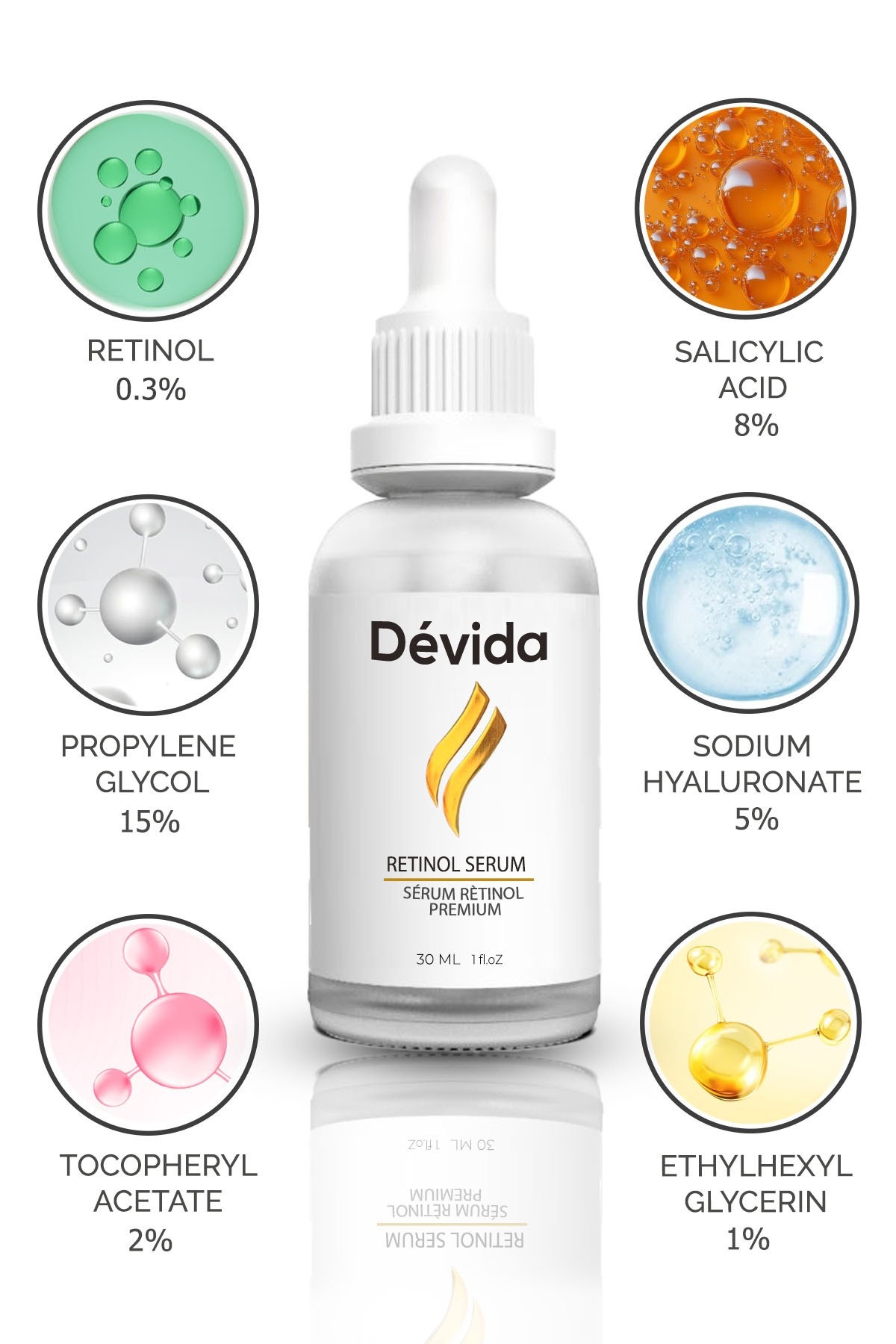
Ingredients listed on the packaging of Devida Xella Series A220: retinol, sodium hyaluronate, panthenol and glycine soja. Ingredients of Devida Retinal Shot Pro Series C110: retinal, bakuchiol, sodium hyaluronate, panthenol and glycine soja; the retinal percentage is not stated. Do not layer two retinoid products on the same evening; decide which one to use and how often according to the product's own instructions.
Question: Which ingredients should I not combine with retinol?
Answer: Layering it on the same evening with AHA/BHA acids (glycolic, salicylic acid), benzoyl peroxide or high-concentration L-ascorbic acid increases irritation. Move these to different evenings, or move vitamin C to the morning. Hyaluronic acid, panthenol, ceramides and niacinamide, on the other hand, can be used with retinol without problems and help balance irritation.
Question: When will I see results?
Answer: Improvements in skin texture and radiance usually take 4–8 weeks, and noticeable change in fine lines takes 12–24 weeks of regular use. The studies above lasted 12 and 24 weeks.
Who should be careful, and when should you see a doctor?
Question: Can retinol be used during pregnancy?
Answer: No. Because oral retinoids are known to cause birth defects, retinoids applied to the skin (including retinol and retinal) are also not recommended during pregnancy or when planning a pregnancy. During breastfeeding, also consult your doctor. In this period you can discuss alternatives such as bakuchiol, niacinamide and vitamin C with your doctor.
Question: I have sensitive skin, rosacea or eczema. Can I use retinol?
Answer: These skin types are easily irritated by retinoids. Strengthen the barrier first; then try it at the lowest frequency, applied over a moisturiser. If redness and stinging continue, stop and consult your dermatologist.
Question: When should I see a doctor?
- Intense burning, swelling, oozing or widespread redness has developed.
- Irritation has not settled within a week of stopping the product.
- You are already using prescription medication for acne, rosacea or eczema.
- You have noticed a new mole, spot or sore, other than wrinkles.
Final word
Question: If you remember just one thing from this article, what should it be?
Answer: Retinol's power comes from patience and consistency. Start at a low frequency, use it only in the evening, don't skip the moisturiser and apply sunscreen every morning. A retinol routine you keep up for several months without overwhelming your skin makes far more difference than a high-strength product you start and abandon within a few weeks.
Devida wishes you healthy and happy days.
Sources
- Mukherjee S et al. Retinoids in the treatment of skin aging: an overview of clinical efficacy and safety — Clin Interv Aging, 2006
- Kong R et al. A comparative study of the effects of retinol and retinoic acid on histological, molecular, and clinical properties of human skin — J Cosmet Dermatol, 2016
- Kafi R et al. Improvement of naturally aged skin with vitamin A (retinol) — Arch Dermatol, 2007
- Dhaliwal S et al. Prospective, randomized, double-blind assessment of topical bakuchiol and retinol for facial photoageing — Br J Dermatol, 2019
- EU's New Retinol Safety Rules — BeautyMatter, 2025
- Regulation (EU) 2024/996 summary — Biorius