Intensive Hydration for Dry and Dehydrated Skin: Hyaluronic Acid
The difference between dry and dehydrated skin, how hyaluronic acid works on the skin, what clinical studies show, and a step-by-step hydration routine.
If your skin feels tight after washing in the morning, your make-up starts to flake by the afternoon, or your cheeks turn red and itchy as soon as winter arrives, this article is for you. We put the most common questions about dry and dehydrated skin to the Devida skincare team. The answers are based on published clinical studies and reviews on hyaluronic acid and skin hydration, and we state clearly which points are backed by strong evidence and which by limited evidence.
This article does not replace a medical diagnosis. Dryness that cracks, bleeds, itches constantly or forms red, scaly patches may be a sign of a condition such as eczema or psoriasis; in that case you need a dermatologist, not a serum.
Are dry skin and dehydrated skin the same thing?
Question: Is there a difference between "dry skin" and "dehydrated skin"?
Answer: They are often confused in everyday language, but in skincare they describe different situations. Dry skin is usually a skin type that naturally produces little oil (lipids). Dehydrated skin is not a skin type but a temporary condition: even oily skin can lose water and look tight and dull. "Dehydrated skin" is a cosmetic description, not a medical diagnosis. In practice, the two frequently occur together.
| Condition | What is missing | Typical signs | Care priority |
|---|---|---|---|
| Dry skin (skin type) | Lipids (oil) | Rough texture, flaking, tightness; barely visible pores | A moisturiser that supports lipids, softens and seals |
| Dehydrated skin (temporary condition) | Water | Dullness, fine "dehydration lines", tightness during the day | Humectants (hyaluronic acid, glycerin) + a moisturiser on top |
| Damaged skin barrier | Integrity of the protective layer | Stinging, burning, redness; products "sting" | Repair first: simple, soothing ingredients; fewer actives |
Question: How does skin actually hold on to moisture?
Answer: The guardian of hydration is the outermost layer of the skin, the stratum corneum. It is made of dead skin cells (corneocytes) that act like bricks, with lipids (ceramides, cholesterol, fatty acids) filling the spaces between them like mortar. Inside the cells there are small water-binding molecules known as the "natural moisturising factor" (NMF). The lipid mortar stops water from evaporating, while NMF keeps water inside (Rawlings and Harding, Dermatol Ther 2004).
When this system is disrupted, more water evaporates through the skin. In scientific measurements this is called transepidermal water loss (TEWL). As TEWL rises, the skin dries out; as it dries, the processes that repair the barrier slow down, and a vicious circle begins.
What is hyaluronic acid and why is everyone talking about it?
Question: Is hyaluronic acid already present in our skin?
Answer: Yes. Hyaluronic acid (HA) is a sugar chain (a glycosaminoglycan) that our body makes itself and that has a very high capacity to bind water. Most of the body's hyaluronic acid is found in the skin, where it plays an important role in keeping skin plump and hydrated. With age and sun damage, the structure and amount of HA in the skin change, and the skin starts to lose moisture (Papakonstantinou et al., Dermato-Endocrinology 2012).
Question: Does hyaluronic acid applied to the skin reach the deeper layers?
Answer: That depends on the size of the molecule. In a study using Raman spectroscopy on human skin samples, low- and medium-molecular-weight HA (20–300 kDa) was able to pass into the stratum corneum, whereas high-molecular-weight HA (1000–1400 kDa) did not and stayed on the surface (Essendoubi et al., Skin Res Technol 2016). In other words, HA in a cream does not reach deep tissue the way an injected filler does; it works mainly in the upper layers of the skin. That does not mean it is ineffective; it simply means expectations should be realistic.
| Name on the label (INCI) | What kind of hyaluronic acid? | Where does it work? |
|---|---|---|
| Sodium hyaluronate | The salt form of hyaluronic acid; the most widely used, highly water-soluble form | Depending on molecular size, forms a moisture film on the surface or passes into the upper layers |
| Hydrolyzed hyaluronic acid | HA broken into small fragments, low molecular weight | Small enough to pass into the stratum corneum |
| Sodium hyaluronate crosspolymer | HA whose chains are linked together (cross-linked) | Used to form a longer-lasting, flexible moisture film on the surface; independent clinical data are limited |
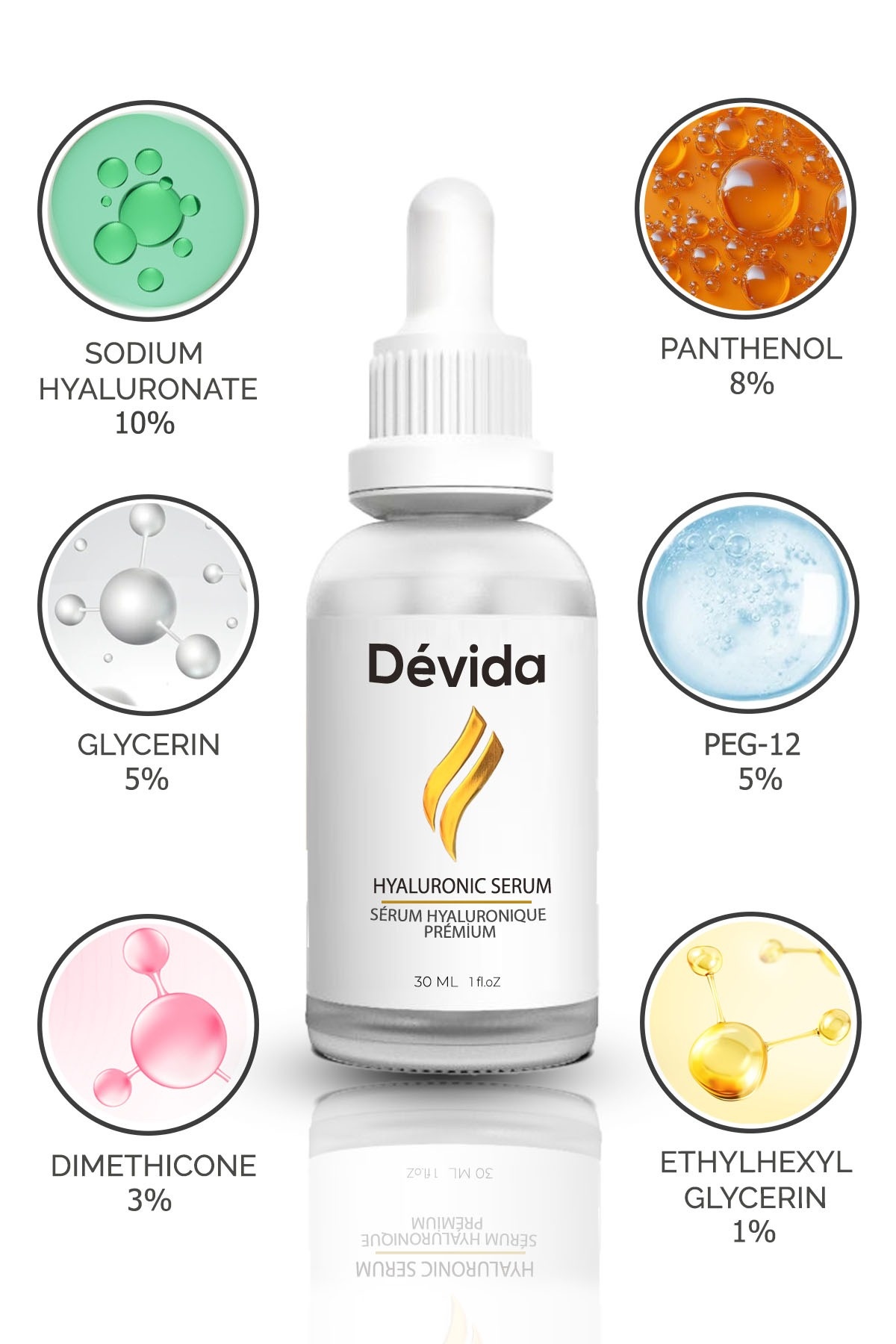
Combining forms of different sizes aims to support hydration both on the surface and in the upper layers. The ingredient list on the packaging of Devida Aura Series A250 serum includes all three of these forms (sodium hyaluronate, hydrolyzed hyaluronic acid, sodium hyaluronate crosspolymer); their percentages are not stated.
What does the science say? Clinical studies
Question: Has it been shown that hyaluronic acid creams or serums really work?
Answer: Yes, but the number and size of the studies are limited. Two notable examples:
- Comparing molecular weights: Creams containing 0.1% hyaluronic acid of different molecular weights (50, 130, 300, 800 and 2000 kDa) were applied around the eyes for 60 days. All forms improved skin hydration and elasticity, while a significant reduction in wrinkle depth was associated with the low-molecular-weight forms. The authors attributed this to the better penetration of smaller molecules (Pavicic et al., J Drugs Dermatol 2011).
- A serum study: Forty women aged 30–65 with signs of sun damage, dry skin and loss of plumpness used a hyaluronic acid serum twice a day together with sunscreen. Measured with a device (corneometry), skin hydration increased by about 55%, and no increase in irritation markers was seen (Draelos et al., Dermatol Ther 2021). Note: this study was supported by the manufacturer of the tested product.
Question: Will every serum give the same results?
Answer: No. The studies tested specific formulas, at specific concentrations, for specific periods. Results depend on the whole formula, the type and amount of HA, the condition of your skin, the climate and, above all, whether you apply a moisturiser on top. The percentages you read are not a guarantee that a product will give the same result on your skin.
Common myths
Question: Is it true that "hyaluronic acid holds 1000 times its weight in water"?
Answer: This phrase is a marketing claim derived from the water-binding capacity of the gel that HA forms with water in the laboratory. It is true that hyaluronic acid binds water very strongly; however, there is no clinical measurement showing that a few drops of serum provide "1000 times" more moisture in the skin. A realistic expectation: with regular use, skin that looks more hydrated, softer and plumper.
Question: In dry air, does hyaluronic acid pull water out of the deeper skin and make it drier?
Answer: This is a claim often repeated on social media. Humectants are known to draw water from the environment and from the layers below; however, no clinical study shows that a hyaluronic acid serum dries the skin out under normal use. There is still a sensible precaution: always apply a moisturiser that locks water in on top of a humectant serum. This is particularly important in cold, dry weather.
Question: The more drops, the more moisture?
Answer: No. Two to three drops are usually enough for the whole face and neck. Any excess does not penetrate; it leaves a sticky film on the surface and can make the products on top pill.
Is hyaluronic acid enough on its own?
Question: Is a serum alone enough?
Answer: For dry skin, usually not. Moisturising ingredients fall into three groups according to how they work, and a good routine combines at least two of them (Purnamawati et al., Clin Med Res 2017):
| Group | What it does | Example ingredients |
|---|---|---|
| Humectants | Bind water and hold it in the upper layer of the skin | Hyaluronic acid, glycerin, betaine, urea, panthenol |
| Emollients | Fill the gaps between cells and smooth the skin | Ceramides, plant oils, fatty acids |
| Occlusives | Form a thin layer on the surface and reduce water loss | Petrolatum, dimethicone, some waxes and oils |
Hyaluronic acid belongs to the first group. In dry skin it needs to be completed with a moisturiser from the second and third groups, which prevents water from evaporating.
Question: Which ingredients work well alongside hyaluronic acid?
Answer: The main supporting ingredients with evidence behind them:
- Glycerin: One of the most studied humectants. It has been shown to improve stratum corneum hydration and barrier function and to help in winter dryness and atopic skin (Fluhr et al., Br J Dermatol 2008).
- Panthenol (provitamin B5): On experimentally irritated skin, a cream containing 5% dexpanthenol used twice daily led to faster barrier repair, increased hydration and less redness (Proksch and Nissen, J Dermatolog Treat 2002).
- Ceramides: An important part of the barrier lipids. In a meta-analysis on atopic dermatitis, ceramide-containing moisturisers reduced the disease severity score more than other moisturisers, while no significant difference was found in water loss (TEWL) measurements (Nugroho et al., Indian J Dermatol 2023). So ceramides are valuable, but not miraculous.
- Betaine and allantoin: Supporting ingredients frequently used to hold moisture and soften the skin; strong clinical evidence for them on their own is limited.
Climate, season and your home environment
Question: Why is my skin so much drier in winter?
Answer: Cold air and low humidity generally weaken the skin's barrier function and make the skin more sensitive to mechanical stress. Flare-ups of dryness-related conditions such as atopic dermatitis also increase in this period (Engebretsen et al., JEADV 2016). Central heating and air conditioning dry out indoor air as well.
Question: What should I change in daily life?
- Keep showers short and use lukewarm rather than very hot water; hot water strips lipids more easily.
- Wash your face with a gentle, non-foaming or low-foaming cleanser instead of soap.
- Pat your skin dry with a towel instead of rubbing, and apply the hydrating serum while the skin is still slightly damp.
- In winter, consider using a humidifier, especially in the bedroom.
- Use peels and acid products less often during dry periods; over-exfoliation weakens the barrier.
Step-by-step: how to use it correctly
Question: How should I apply a hyaluronic acid serum?
Answer: Take 2–3 drops onto clean, ideally slightly damp skin and press them gently into the face and neck with your fingertips. Stay at least 1 cm away from the eye area. Wait a minute or two for it to absorb, then apply your moisturiser. In the morning routine, the last step is always sunscreen.
Question: What should a morning and evening routine look like?
Answer: An example routine for dry and dehydrated skin:
| Step | Morning | Evening |
|---|---|---|
| 1 | Gentle cleanser or just lukewarm water | Gentle cleanser (double cleanse if wearing make-up) |
| 2 | Hydrating serum: hyaluronic acid (e.g. Devida Aura Series A250, 2–3 drops) | Hydrating serum: hyaluronic acid (once a day may be enough if your skin is dry or sensitive) |
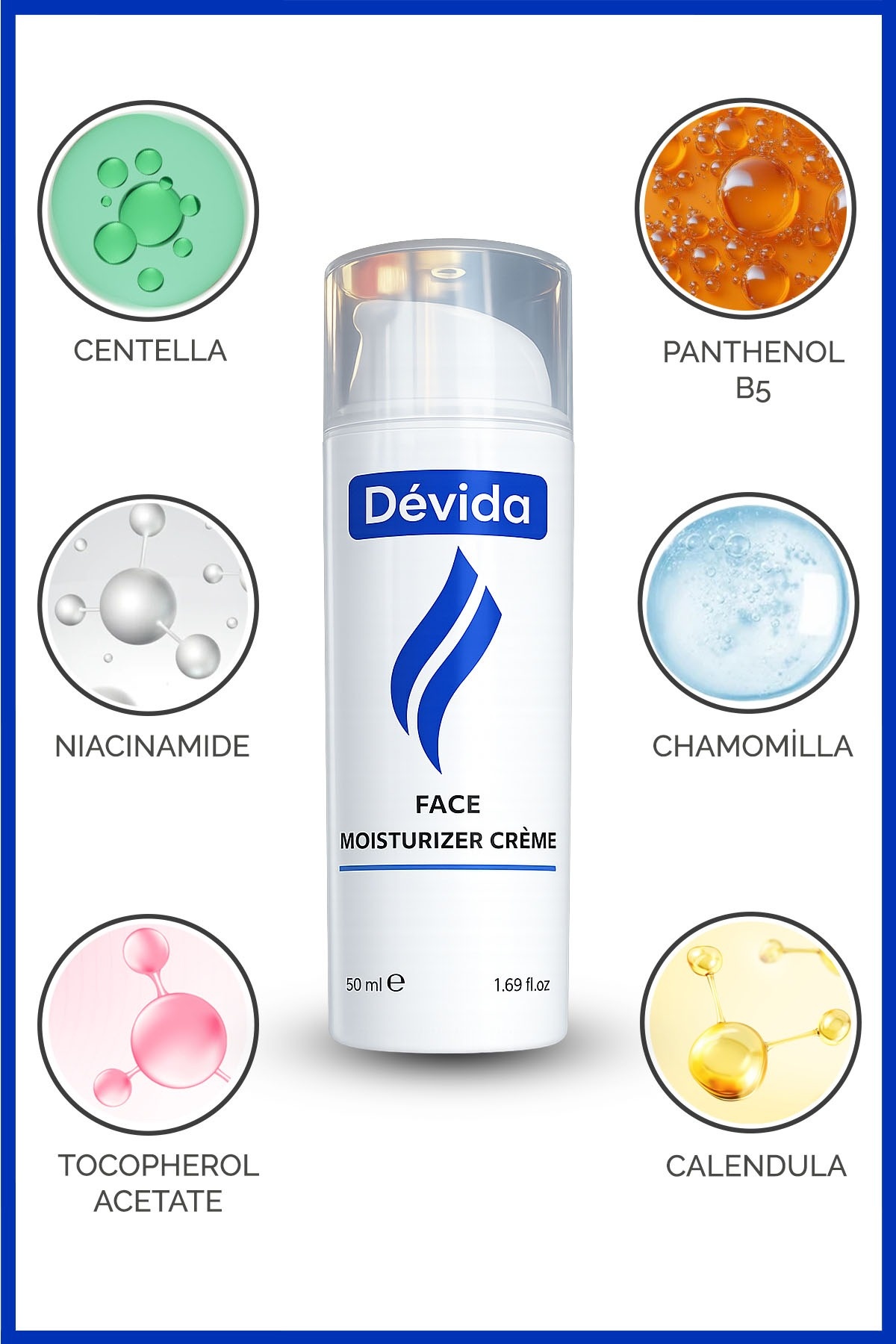
| 3 | Moisturiser with ceramides and panthenol (e.g. Devida HydraVive C111) | The same moisturiser; a slightly thicker layer on very dry areas |
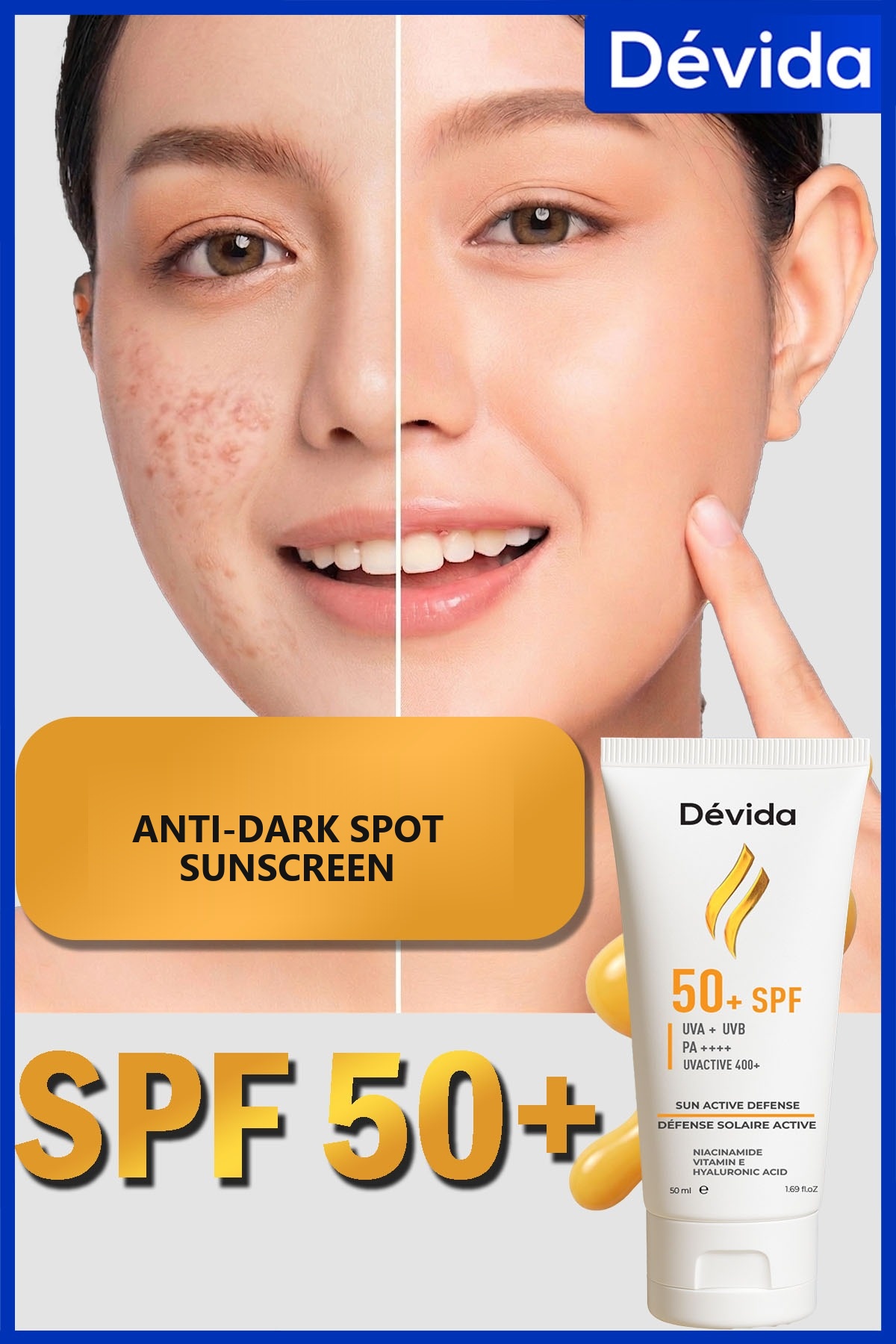
| 4 | Sunscreen, SPF 30–50 (e.g. Devida Sunveil Series G100 SPF 50) | — |
Use stated on the packaging of Devida Aura Series A250: once or twice a day, morning and/or evening; once a day for dry or sensitive skin; for very sensitive skin, starting every other day is recommended. When deciding how often to use any product, always follow its own instructions and ingredient list (INCI).
Question: I use retinol or a dark-spot serum. Can I combine it with hyaluronic acid?
Answer: Yes. Hyaluronic acid is one of the easiest ingredients to combine with actives, and it helps balance the feeling of dryness these products can cause. Apply the active serum, let it absorb, then follow with hyaluronic acid and moisturiser. If your skin stings on a retinoid evening, use only the hydrating serum and moisturiser that night.
Question: When will I see results?
Answer: The softening and comfort effect of a hydrating serum and moisturiser can be felt from the first application. Plumper, smoother-looking skin becomes noticeable within a few weeks of regular use; the studies above lasted between 6 weeks and 60 days. When you stop using them, the effect gradually fades; hydration is not a one-off treatment but a daily habit.
Who should be careful, and when should you see a doctor?
Question: Can hyaluronic acid be used during pregnancy or breastfeeding?
Answer: Hyaluronic acid applied to the skin is generally considered well tolerated, as it is a molecule already present in the body. Even so, during pregnancy and breastfeeding it is best to show the full ingredient list of the product you use to your obstetrician or dermatologist.
Question: I have sensitive skin and the serum stings. What should I do?
Answer: Stinging is usually caused not by hyaluronic acid but by an already damaged barrier or by another ingredient in the formula. Before starting a new product, do a patch test behind the ear or under the jaw and wait 24–48 hours. If stinging continues, stop using it and let your skin rest for a few days with a simple moisturiser only.
Question: When should I see a doctor instead of using a moisturiser?
Answer: See a dermatologist if:
- The dryness does not improve within 2–3 weeks despite regular moisturising.
- There are cracks, bleeding, oozing or crusting.
- Red, well-defined, scaly patches form, or severe itching disturbs your sleep.
- The dryness affects your whole body and, at the same time, you notice tiredness, feeling cold, weight changes or hair loss (internal conditions such as thyroid disorders should be checked).
- Marked dryness appeared after starting a new medicine.
Final word
Question: If you remember just one thing from this article, what should it be?
Answer: Hydration is about layers. Hyaluronic acid draws water into the skin; a moisturiser keeps that water in; sunscreen protects against the factors that wear the barrier down. Cutting back on hot water, harsh cleansers and over-exfoliation and doing these three steps consistently every day makes far more difference than any single "miracle" product.
Devida wishes you healthy and happy days.
Sources
- Rawlings AV, Harding CR. Moisturization and skin barrier function — Dermatol Ther, 2004
- Papakonstantinou E, Roth M, Karakiulakis G. Hyaluronic acid: A key molecule in skin aging — Dermato-Endocrinology, 2012
- Essendoubi M et al. Human skin penetration of hyaluronic acid of different molecular weights as probed by Raman spectroscopy — Skin Res Technol, 2016
- Pavicic T et al. Efficacy of cream-based novel formulations of hyaluronic acid of different molecular weights in anti-wrinkle treatment — J Drugs Dermatol, 2011
- Draelos ZD et al. Efficacy Evaluation of a Topical Hyaluronic Acid Serum in Facial Photoaging — Dermatol Ther (Heidelb), 2021
- Purnamawati S et al. The Role of Moisturizers in Addressing Various Kinds of Dermatitis: A Review — Clin Med Res, 2017
- Fluhr JW, Darlenski R, Surber C. Glycerol and the skin: holistic approach to its origin and functions — Br J Dermatol, 2008
- Proksch E, Nissen HP. Dexpanthenol enhances skin barrier repair and reduces inflammation after sodium lauryl sulphate-induced irritation — J Dermatolog Treat, 2002
- Nugroho WT et al. The Efficacy of Moisturisers Containing Ceramide Compared with Other Moisturisers in the Management of Atopic Dermatitis — Indian J Dermatol, 2023
- Engebretsen KA et al. The effect of environmental humidity and temperature on skin barrier function and dermatitis — JEADV, 2016