Goodbye Dark Spots: How Should Brightening and Anti-Spot Serums Be Used?
Evidence-based active ingredients, sun protection and a step-by-step routine against sun spots, melasma and post-acne marks.
Dark spots are not erased overnight by a single cream; but when the right active ingredient, the right order and daily sun protection come together, they fade in a visible and measurable way. In this article we put our readers' most frequent questions to the Devida skincare team. The answers are based on clinical studies, systematic reviews and current European cosmetics regulation published between 2019 and 2026.
This article does not replace a medical diagnosis. If you notice a spot that is new, growing quickly, changing colour, bleeding or itching, you need a dermatologist, not a serum.
What is a dark spot and how does it form?
Question: What actually is a dark spot?
Answer: A dark spot is an area of skin where the pigment melanin is overproduced or unevenly distributed. Melanin is made in melanocytes, cells in the upper layer of the skin. The key enzyme in this process is tyrosinase: it converts the amino acid tyrosine first into L-DOPA and then into dopaquinone. Through a chain of reactions, dopaquinone becomes brown-black eumelanin or yellow-red pheomelanin.
The melanin produced is transferred to the surrounding skin cells (keratinocytes) in small packets called melanosomes. So a spot forms at three points: production, packaging and transfer. Effective dark-spot serums target at least one of these three points.
Question: Are all dark spots the same?
Answer: No, and the choice of treatment changes accordingly. The three most common types are:
| Type of spot | Typical appearance | Main trigger | Management with serums |
|---|---|---|---|
| Sun spot (solar lentigo) | Sharply defined, round, brown spots | UV damage accumulated over years | Can fade; deep and old ones may need a procedure |
| Melasma ("mask of pregnancy") | Symmetrical, blurry-edged patches on the cheeks, forehead, upper lip | Sun, visible light, hormones, genetics | Can be controlled; strong tendency to recur |
| Post-inflammatory hyperpigmentation (PIH) | Dark mark left after a pimple, wound or irritation | Inflammation | Usually responds well; the main rule is preventing new inflammation |
Question: Why does it take weeks for a spot to fade?
Answer: Because serums do not "erase" existing pigment; they reduce the production of new pigment. Melanin that has already formed decreases as skin cells renew and shed from the surface. In adults this renewal cycle takes weeks and slows with age. That is why almost all clinical studies last 8–12 weeks, or even 24 weeks.
The new picture in science: spots are not just on the surface
Question: What has changed in recent years in our understanding of dark spots, especially melasma?
Answer: The biggest change is this: melasma is no longer seen only as a problem of "overactive melanocytes". Reviews published in 2025 show that communication between the epidermis, the basement membrane and the upper dermis is disrupted (Int J Dermatol 2025; Biology 2025).
The main changes seen in skin with melasma:
- Aged (senescent) fibroblasts: under UV stress they release signalling molecules such as SCF and HGF that stimulate melanocytes.
- Basement membrane damage: the boundary between epidermis and dermis weakens; pigment and signals pass more easily.
- Increased blood vessels and mast cells: inflammation-related cells and new vessels feed the spot.
- Barrier disruption and oxidative stress: free radicals increase pigment production.
Question: What does this mean for daily skincare?
Answer: There are three practical consequences. First, routines that combine different mechanisms make more sense than single-target products: an ingredient that reduces production, one that reduces transfer, and an antioxidant. Second, aggressive treatments that irritate the skin can worsen spots by increasing inflammation. Third, protection is needed not only from UV but also from visible light. We return to this point below.
A 2026 systematic review summarising recent innovations highlights non-hydroquinone brighteners (thiamidol, Melasyl), antioxidants, tranexamic acid and advanced delivery systems, while stressing that recurrence remains the biggest problem (J Cosmet Dermatol 2026).
Active ingredients: what does each one do, and how strong is the evidence?
Question: Labels list dozens of names. Which ones really work?
Answer: The table below summarises the main ingredients that have been tested in clinical studies in humans. The "Evidence" column reflects the number and quality of studies; it does not guarantee how effective a product will be on your skin.
| Active ingredient | How does it work? | Clinical evidence | Caution |
|---|---|---|---|
| Niacinamide (vitamin B3) | Reduces the transfer of melanosomes to skin cells; calms inflammation | Moderate–strong | Redness in some people at very high concentrations |
| Vitamin C (L-ascorbic acid) | Antioxidant; inhibits tyrosinase; reduces dopaquinone back | Moderate | Sensitive to air and light; low pH may sting |
| Tranexamic acid | Reduces melanocyte-stimulating signals by suppressing the plasmin pathway | Strong (in melasma) | Oral use only under medical supervision |
| Thiamidol (isobutylamido thiazolyl resorcinol) | Strongly inhibits human tyrosinase | Strong | Patented; found in certain brands |
| Azelaic acid | Inhibits tyrosinase; acts on overactive melanocytes; antibacterial | Moderate–strong | Burning and itching common in the first weeks |
| Alpha-arbutin | Inhibits tyrosinase | Moderate | Maximum 2% in face creams in the EU |
| Kojic acid | Binds the copper in tyrosinase | Moderate | Maximum 1% in face and hand products in the EU |
| Melasyl (2-MNG) | Captures melanin precursors rather than blocking tyrosinase | New, limited | Most studies are manufacturer-funded |
| Retinoids (retinol etc.) | Speed up cell renewal, help pigment to be shed | Moderate (supportive) | Not used in pregnancy; can irritate |
Question: Does niacinamide really work?
Answer: Yes. In a double-blind, randomised study, 4% niacinamide was applied to one half of the face and 4% hydroquinone to the other. Good-to-excellent improvement was seen in 44% on the niacinamide side and 55% on the hydroquinone side; side effects occurred in 18% with niacinamide and 29% with hydroquinone (Navarrete-Solís et al., 2011). In other words, a slightly slower but much better tolerated option. In skin biopsies, niacinamide also reduced mast cell numbers and signs of sun damage.
Question: What should we look for in vitamin C?
Answer: The most active form of vitamin C is L-ascorbic acid. Sheldon Pinnell's 2001 study showed that the pH must be below 3.5 for it to penetrate the skin, that tissue levels peaked at a 20% concentration, and that its half-life in the skin was about 4 days (Pinnell et al., Dermatol Surg 2001). An important note: this study was carried out on pig skin, and human skin may behave differently.
L-ascorbic acid is powerful but unstable. It should therefore be sold in dark, airtight packaging; if the liquid has turned distinctly orange-brown, it has oxidised. More stable derivatives (such as ascorbyl glucoside or tetraisopalmitate) are gentler and more durable, but their conversion rates to L-ascorbic acid in the skin vary (J Skin Stem Cell 2025). Derivatives are a sensible choice for sensitive skin, and L-ascorbic acid for resilient skin that wants faster results.
Question: Why has tranexamic acid become so popular?
Answer: Because it also addresses the vascular and inflammatory side of melasma. A meta-analysis published in 2024 showed that tranexamic acid given orally, applied to the skin or by injection significantly reduced melasma severity (J Dermatol Treat 2024). Adding oral tranexamic acid to standard treatment markedly lowered the risk of recurrence (risk ratio 0.28) (Clin Exp Dermatol 2024).
Very important: oral tranexamic acid is a medicine; it affects blood clotting and may carry risks for people with a history of clots, smokers or those taking hormonal medication. It is used only on a doctor's prescription. Cosmetic forms applied to the skin do not carry this systemic risk.
Question: What do we know about thiamidol?
Answer: Thiamidol is a molecule designed to target human tyrosinase. In a randomised, assessor-blinded study in Brazil, no difference in efficacy was found between 0.2% thiamidol and 4% hydroquinone after 90 days (Lima et al., JEADV 2021). In an earlier split-face comparison, no participant worsened on the thiamidol side, while about 10% worsened on the hydroquinone side (J Invest Dermatol 2019). Note: some of these studies were supported by the company that owns the ingredient.
Question: Who is azelaic acid suitable for?
Answer: Especially for people who have dark spots and also a tendency to acne or rosacea. Azelaic acid both inhibits tyrosinase and acts on bacteria and inflammation. A meta-analysis comparing 20% azelaic acid with 4% hydroquinone reported that azelaic acid may reduce melasma severity more, but that larger and longer studies are needed (Cureus, 2023). Some individual studies found hydroquinone faster, so results are not consistent.
Question: Is Melasyl new?
Answer: Yes, it is a molecule developed by L'Oréal and launched in 2024. Instead of stopping tyrosinase, it binds melanin precursors such as dopaquinone and prevents them from turning into pigment (JCAD 2025). The mechanism is interesting, but published studies are few, mostly open-label and manufacturer-sourced. Independent comparative studies are still limited.
Sun protection: the step that decides whether your serum succeeds
Question: Can a dark-spot serum be used without sunscreen?
Answer: It can, but the result is largely wasted. In all the clinical studies mentioned above, participants used a broad-spectrum sunscreen every day. In other words, the success rates you have read were achieved together with sun protection. A serum slows the production of new pigment; one unprotected sunny day can quickly undo that effort.
Question: Why is "visible light" being talked about?
Answer: Because we now know that spots are not formed by UV rays alone. Research has shown that the short-wavelength blue-violet part of visible light (around 415 nm) causes long-lasting pigmentation in healthy volunteers, whereas long-wavelength red light (630 nm) does not (Passeron et al.). This effect is particularly marked in medium and darker skin tones.
Question: So how do we protect ourselves from visible light?
Answer: The strongest evidence is for tinted sunscreens containing iron oxide. In a double-blind, randomised study of melasma patients treated with hydroquinone, those using an iron-oxide sunscreen showed 15% greater improvement in the MASI score at 8 weeks than those using a UV-only sunscreen (Castanedo-Cázares et al., 2014). A systematic review published in 2026 also reported that iron-oxide formulations consistently offered better protection against visible-light-induced pigmentation than untinted mineral sunscreens (Dermatol AMJ 2026). One gap: most tinted sunscreens on the market do not state their iron-oxide content or visible-light testing on the label (Practical Dermatology).
Question: How much should we apply, and how often?
Answer: The SPF on the label is measured in the laboratory by applying 2 mg of cream per square centimetre. Most people apply less than half of that, and the real protection ends up far below the label value. Practical rules:
- For face and neck, use two lines of cream along the length of your index and middle fingers.
- Choose at least SPF 30, preferably SPF 50, with stated UVA protection; for spot-prone, medium-to-dark skin, prefer a tinted formula with iron oxide.
- When outdoors, reapply every 2 hours and immediately after sweating or swimming.
- Apply it on cloudy and winter days too; UVA and visible light can pass through glass and clouds.
- A hat, sunglasses and shade at midday do not replace sunscreen, but they are a strong complement.
Correct use, step by step
Question: How should I start a new dark-spot serum?
Answer: Do a patch test first. Apply a small amount behind your ear or under your jaw and wait 24–48 hours. If there is no redness, swelling or intense itching, move on to the face. Use it every other day for the first two weeks, then daily as your skin gets used to it. Do not start several new products at the same time; if there is a reaction, you will not know the cause.
Question: What should my morning and evening routine look like?
Answer: The general rule is to apply from the thinnest texture to the richest. An example routine:
| Step | Morning | Evening |
|---|---|---|
| 1 | Gentle cleanser | Gentle cleanser (double cleanse if wearing make-up) |
| 2 | Antioxidant serum: vitamin C (e.g. Devida Citréa Series A240) | Dark-spot serum (e.g. Devida BrightFix Series A200) |
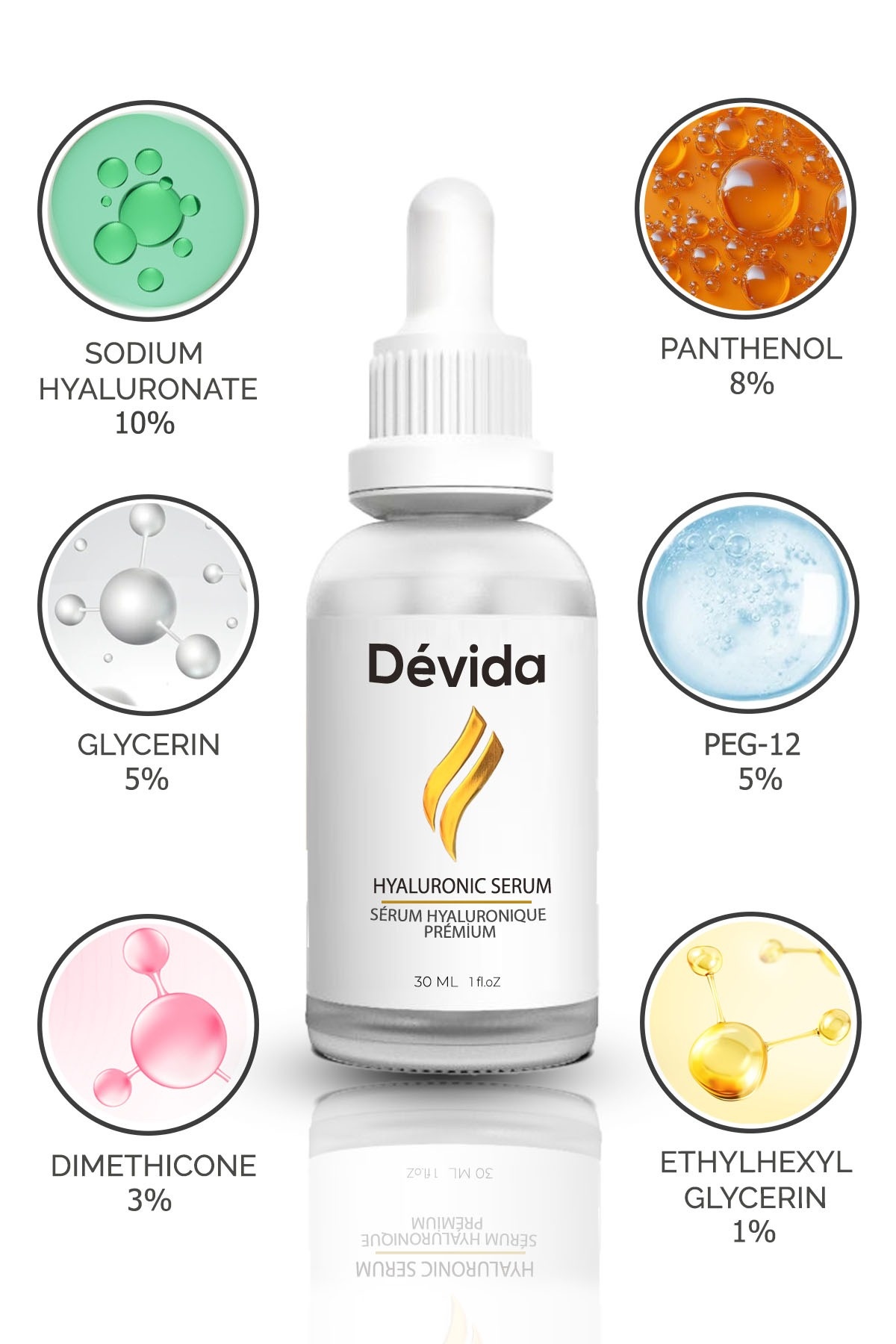
| 3 | Hydrating serum: hyaluronic acid (e.g. Devida Aura Series A250) | 2–3 evenings a week, a retinoid if your skin is used to it (do not combine with acids on the same evening) |
| 4 | Moisturiser | Moisturiser |
| 5 | Sunscreen (SPF 50, preferably with iron oxide) | — |
Vitamin C is used in the morning because it supports sunscreen against free radicals caused by UV and pollution during the day; it does not replace sunscreen. When deciding which serum to use at which time, always follow the product's own instructions and ingredient list (INCI).
Question: I have post-acne marks. Is the routine different?
Answer: Here the priority is preventing new breakouts, because every new inflammation means a new mark. If you use an anti-acne serum (e.g. Devida Elixir Series A260) in the same routine as a dark-spot serum, and both contain acids, use them on different evenings rather than layering them on the same night. Squeezing pimples deepens marks; this single step matters more than most serums.
Question: How much serum should I apply, and should I wait between layers?
Answer: 2–4 drops are usually enough for the whole face. Applying more to the spot does not increase the effect; it increases irritation. Unless a product states otherwise, apply it in a thin layer to the whole face rather than only to the spot. This prevents a ring-shaped colour difference with the surrounding skin. Waiting a minute or two between layers for the serum to absorb is enough.
Question: When will I see results?
Answer: Realistic expectations: radiance and a more even tone in the first 4 weeks, noticeable fading of spots in 8–12 weeks. Most clinical studies are carried out over this period. In melasma, the goal is not to "erase completely" but to keep it under control. Once spots have faded, continuing the product at a maintenance level instead of stopping, and never giving up sun protection, reduces recurrence.
Myths and common mistakes
Question: Is "the higher the percentage, the better" true?
Answer: No. Every ingredient has a range in which it is effective and safe. In Pinnell's study, penetration did not increase when vitamin C exceeded 20%. High concentrations increase the risk of irritation, and irritation, especially on darker skin, means new spots.
Question: Can't vitamin C and niacinamide be used together?
Answer: This common warning is based on old laboratory observations. Under normal skincare conditions, these two ingredients can be used together in a daily routine. If your skin is sensitive or you see redness, using one in the morning and the other in the evening is a practical solution.
Question: Are "natural" products or home remedies safer?
Answer: "Natural" does not mean safe. Acidic and photosensitising mixtures such as lemon juice can cause burns and permanent spots in the sun. Baking soda disrupts the skin's natural acidic pH. Uncontrolled proportions are always riskier than a controlled formula.
Question: Why isn't hydroquinone found in cosmetic products?
Answer: Hydroquinone is an effective ingredient, but long-term, uncontrolled use can cause serious side effects such as ochronosis, a permanent blue-grey discolouration. For this reason, its use as a skin lightener in cosmetics applied to the skin is not permitted in the European Union; it is found in medicines prescribed by doctors. Turkey's cosmetics legislation is aligned with EU regulation. Stay away from products of unknown origin sold online as "cosmetic creams with hydroquinone"; some have been reported to contain mercury or high-dose cortisone.
Question: Is there a new rule on arbutin and kojic acid?
Answer: Yes. European Commission Regulation 2024/996, based on the opinions of the EU Scientific Committee on Consumer Safety (SCCS), introduced the following limits (Biorius; BeautyMatter):
| Ingredient | EU limit |
|---|---|
| Alpha-arbutin | Maximum 2% in face creams, maximum 0.5% in body lotions |
| Arbutin | Face creams only, maximum 7% |
| Kojic acid | Face and hand products only, maximum 1% |
| Retinol and its esters | Maximum 0.05% retinol equivalent in body lotions, maximum 0.3% in other products; "Contains vitamin A" warning mandatory |
In products containing arbutin, hydroquinone may only be present at unavoidable trace levels. Compliance became mandatory for new products from 2025; transition periods for withdrawing non-compliant products from shelves extend into 2026–2027. These limits do not mean the ingredients are dangerous; they show that they are considered safe below the stated concentrations.
Question: What is the most common mistake?
Answer: Expecting results within a few weeks, switching products, and skipping sunscreen. Jumping from product to product keeps irritating the skin and never gives any product enough time to work. Other common mistakes: layering several acids on the same night, rubbing or picking at spots, and continuing to apply actives to irritated skin.
Who should be careful, and when should you see a doctor?
Question: Can dark-spot serums be used during pregnancy or breastfeeding?
Answer: Melasma is very common in pregnancy, and some of it fades on its own after birth. During this period, retinoids (including retinol) and hydroquinone should not be used, and oral tranexamic acid must never be taken without a doctor's decision. Azelaic acid, niacinamide and vitamin C are generally considered safer options. Even so, during pregnancy and breastfeeding, check every new product with your obstetrician or dermatologist. The safest and most effective step in this period is sun protection.
Question: I have sensitive skin, rosacea or eczema. What should I do?
Answer: When the barrier is weak, repair comes first. After calming the skin with a moisturiser and sunscreen, start with well-tolerated ingredients such as niacinamide or azelaic acid at a low concentration. High-concentration L-ascorbic acid, retinoids and peeling products easily irritate this type of skin.
Question: When should I see a doctor instead of using a serum?
Answer: See a dermatologist without delay if:
- The spot is new and growing quickly.
- It is asymmetrical, has irregular edges, more than one shade of colour, or is larger than 6 mm.
- It bleeds, crusts, itches or changes shape.
- It has not changed at all after 12 weeks of regular use and sun protection.
- The spots are widespread on the body or appear together with signs of hormonal disorder (e.g. irregular periods, excessive hair growth).
For stubborn melasma, doctors may consider prescription creams, oral tranexamic acid, chemical peels or laser. Each requires an individual decision; laser in particular can worsen melasma if applied incorrectly.
Final word
Question: If you remember just one thing from this article, what should it be?
Answer: Fighting dark spots is not a sprint but a routine. Choose an evidence-based active ingredient, use it regularly for at least 8–12 weeks, and apply your sunscreen every morning, in every season. Science shows that spots involve more than one layer of the skin; that is why patient, gentle and consistent care always gives better results than aggressive, short-lived experiments.
Devida wishes you healthy and happy days.
Sources
- Pathogenesis of Melasma Explained — Int J Dermatol, 2025
- Unraveling Melasma: From Epidermal Pigmentation to Microenvironmental Dysregulation — Biology, 2025
- Targeting Melasma: Innovations in Pigment Deposition and Photoaging — J Cosmet Dermatol, 2026
- Niacinamide 4% versus Hydroquinone 4% in Melasma — Dermatol Res Pract, 2011
- Topical L-Ascorbic Acid: Percutaneous Absorption Studies — Dermatol Surg, 2001
- Topical Vitamin C and Its Derivatives in Cosmetic Science — J Skin Stem Cell, 2025
- Tranexamic Acid for Melasma: Meta-analysis of RCTs — J Dermatol Treat, 2024
- Oral Tranexamic Acid as Adjuvant to Triple Combination Cream — Clin Exp Dermatol, 2024
- Thiamidol vs. 4% Hydroquinone for Facial Melasma — JEADV, 2021
- Effective Tyrosinase Inhibition by Thiamidol in Melasma — J Invest Dermatol, 2019
- Azelaic Acid versus Hydroquinone in Melasma: Meta-analysis — Cureus, 2023
- 2-MNG (Melasyl) Serum and Sunscreen Regimen — JCAD, 2025
- Near-Visible Light and UV Photoprotection in Melasma — Photodermatol Photoimmunol Photomed, 2014
- Prevention of Melasma Relapses with UV + Short-Wavelength Visible Light Sunscreen
- Sunscreen Filters and Visible Light Blockers in Melanated Skin — Dermatol AMJ, 2026
- Iron Oxides in Tinted Sunscreens — Practical Dermatology
- Regulation (EU) 2024/996 summary — Biorius
- EU's New Retinol Safety Rules — BeautyMatter, 2025