Devida on Onedio: The Answer to "An AI-Supported Serum?"
The questions raised by Onedio's article on Devida: what an AI-supported formula means, and what is really in the BrightFix, Citréa and Vega serums.
If you came across Devida in the Onedio article titled "AI-Supported Serum? Europe's Favourite DEVIDA Now in Turkey!" and wondered "what does an AI-supported serum mean, and what is really in these serums?", this article is for you. The Onedio piece introduces Devida to its readers by stressing how important it is that the products used for healthy skin are genuinely clean and high quality (Onedio). In this article we put the most common questions to the Devida skincare team and supported the answers with scientific sources and the products' packaging information.
This article does not replace a medical diagnosis. If you have a skin condition or take medication, consult your doctor before starting a new product.
Who is Devida?
Question: What products does Devida offer, and who runs the shop?
Answer: Devida is a cosmetics brand that brings skin serums, facial care products and fragrance collections to international customers. The shop is operated by Devida Fransa LLC; its contact address is 55 rue Grignan, 13006 Marseille, France, and all pre- and after-sales questions can be sent to [email protected]. As the site's "About us" page states, international activity does not mean unconditional delivery to every country or that all products are made in France; available delivery options are shown at checkout.
What does an "AI-supported formula" mean?
Question: Is artificial intelligence really used in cosmetics?
Answer: Yes. Recent reviews in cosmetic science describe the growing use of artificial intelligence and machine learning in formula development: predicting the safety and tolerability of ingredients, designing formula structures such as emulsions and optimising formulas are among the main applications (ACS Omega 2025; Cosmetics 2025).
Question: Is a serum developed with AI automatically more effective than a conventional one?
Answer: No, and it is important to say so honestly. The same reviews note that real-world validation of these methods is often still lacking and that some approaches remain largely at the proof-of-concept stage. AI is a tool that speeds up formula development; what a product does on your skin is determined by its active ingredients, their concentrations and regular use. So when evaluating a serum, looking at "what is in it" rather than "how it was developed" is the most reliable approach.
What is in the featured serums?
Question: Which serums were featured in the Onedio article, and what do they contain?
Answer: The information below is the ingredients stated on the products' packaging and usage guides; percentages are not stated. The full ingredient list (INCI) is on each product's packaging.
| Product | Care purpose | Ingredients stated on the packaging | Use |
|---|---|---|---|
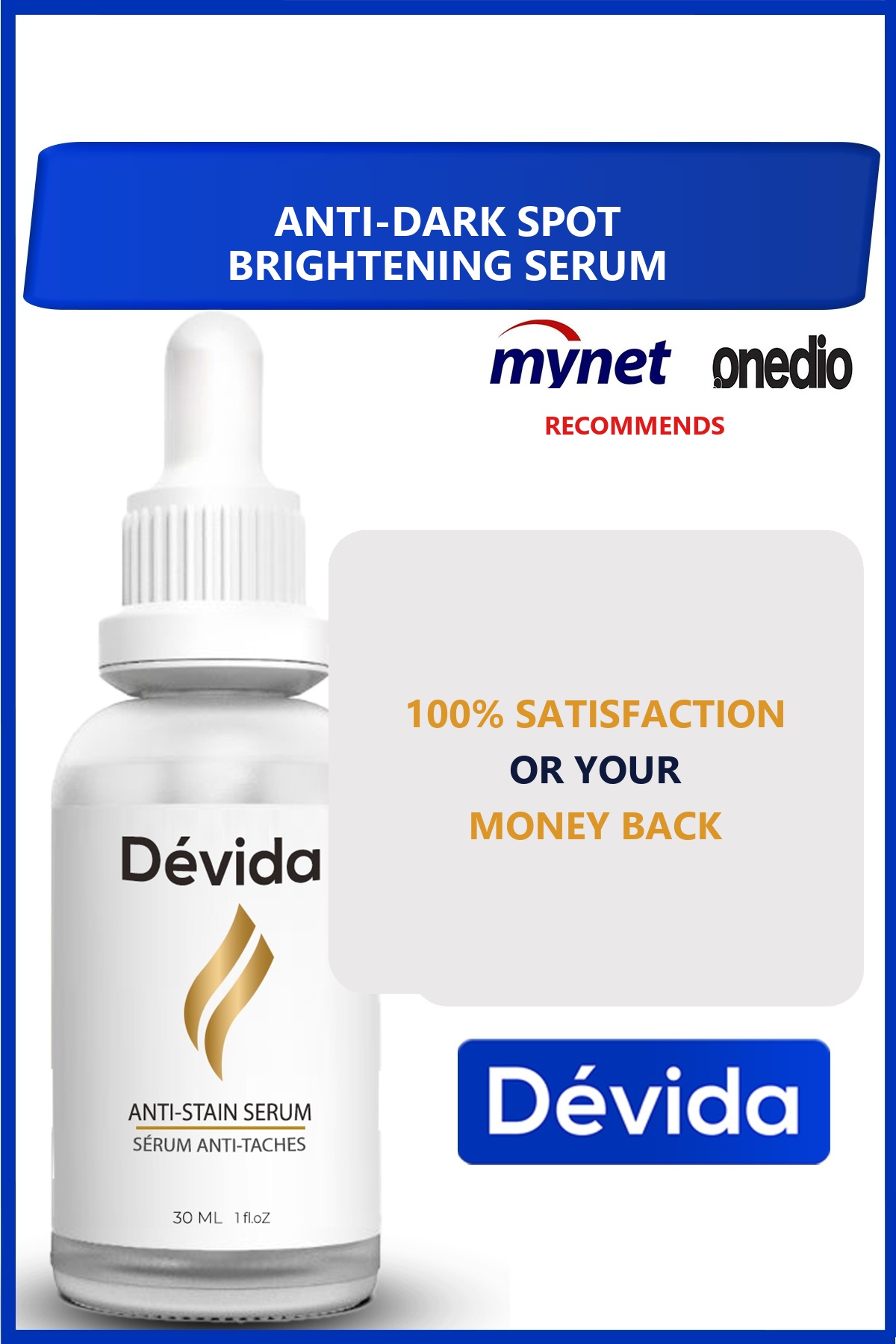
| Devida BrightFix Series A200 | For the appearance of sun spots, post-acne marks and uneven tone | Vitamin C derivatives, niacinamide, sodium hyaluronate, panthenol, glycine soja | 2–3 drops; face, forehead and neck |
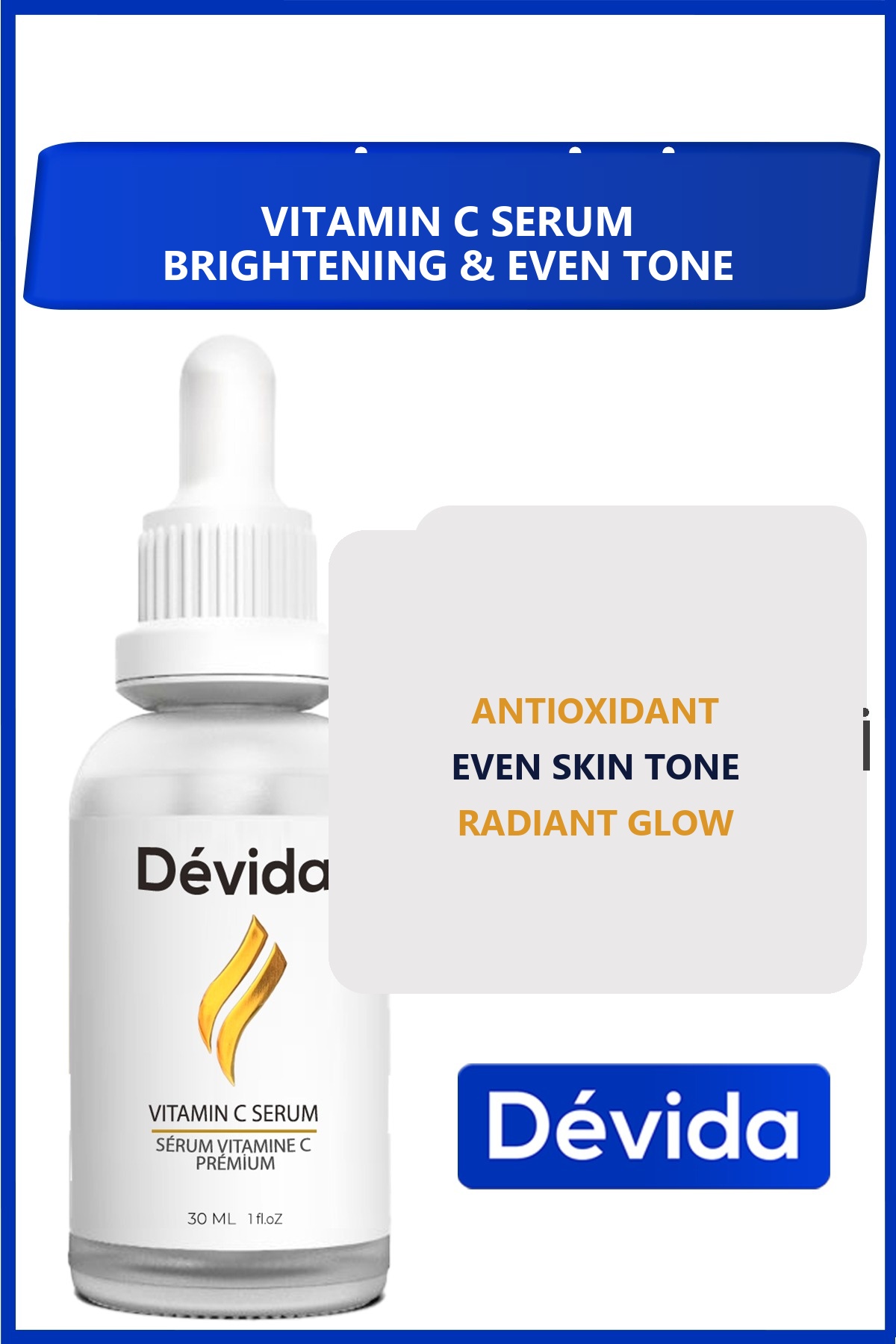
| Devida Citréa Series A240 | To reduce dullness, for a livelier, more even-toned look | Vitamin C derivatives, niacinamide, sodium hyaluronate, panthenol, glycine soja | 1–2 drops; especially recommended in the morning |
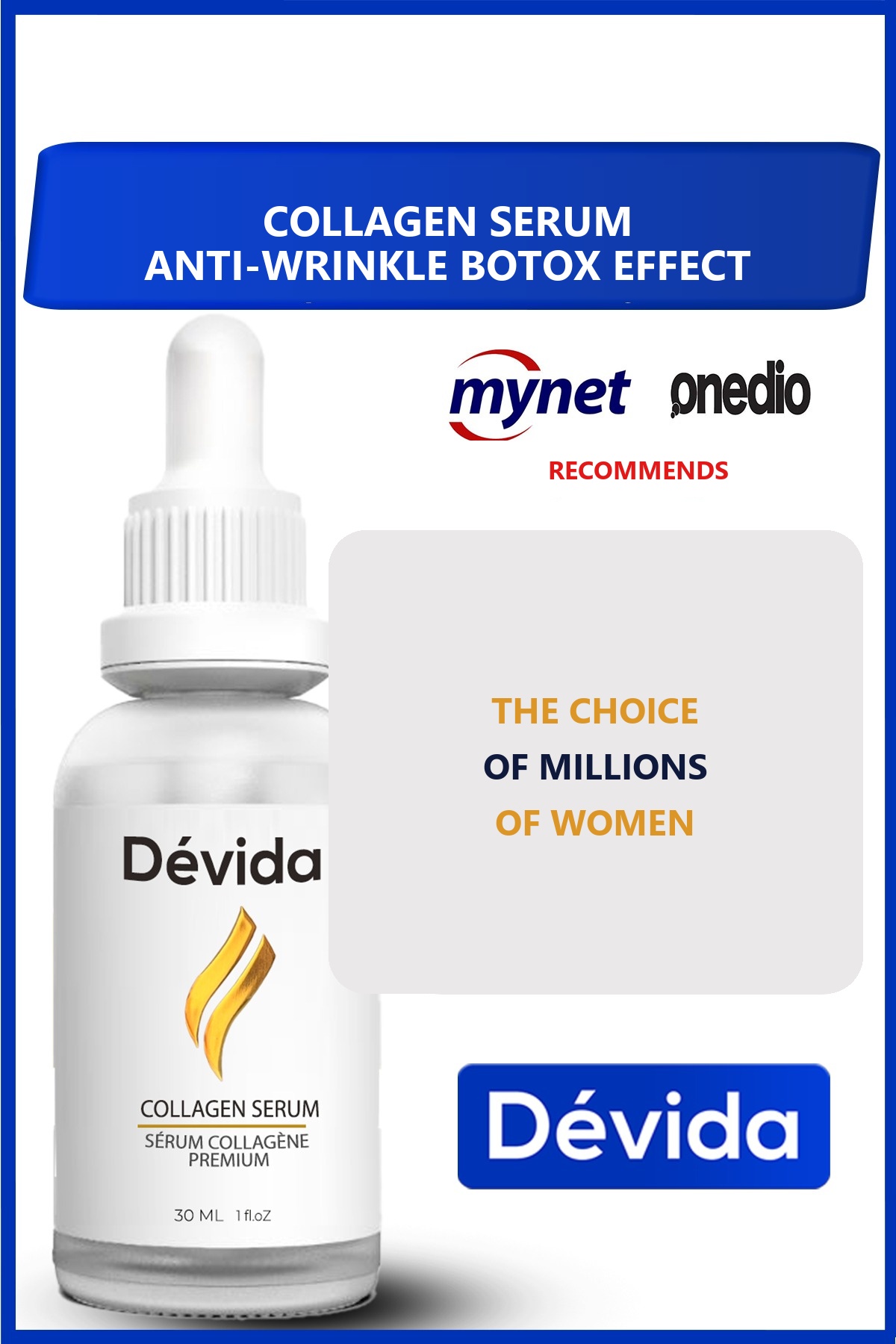
| Devida Vega Series A230 | For hydration and the appearance of fine lines | Hydrolysed collagen, sodium hyaluronate, panthenol, glycine soja; contains no retinol | 2–3 drops; morning and/or evening |
Question: What do these ingredients do, scientifically?
Answer: In brief:
- Niacinamide: Reduces the transfer of pigment to skin cells; a double-blind study showed 4% niacinamide to be a well-tolerated option in melasma (Navarrete-Solís et al., 2011).
- Vitamin C: An antioxidant that inhibits tyrosinase, the key enzyme of pigment production; reviews stress that its effect depends on the stability and skin penetration of the formula (Al-Niaimi and Chiang, 2017).
- Hyaluronic acid (sodium hyaluronate): Holds moisture on the surface and in the upper layers of the skin.
- Hydrolysed collagen: Works like a moisturiser that holds water on the skin's surface; it does not reach deep tissue and become the skin's own collagen.
You can find more detailed information on these ingredients in our blog articles on dark spots, vitamin C and niacinamide, hyaluronic acid and collagen.
Common myths
Question: Does being a "European brand" mean a product suits every skin?
Answer: No. EU cosmetics legislation sets strict rules for product safety, but no product suits every skin in the same way. Every new product should be tried with a patch test, and you should watch how your own skin reacts.
Question: How should I understand "money back if you see no effect"?
Answer: You can ask in writing at [email protected], before ordering, about the current terms (duration, how to apply) of such campaigns shown on some product images. Commercial campaigns do not replace your statutory rights described on the site's "Returns and withdrawal" and "Legal guarantees and complaints" pages; these rights are always preserved.
Question: How long does a serum take to work?
Answer: The comfort of hydrating serums is felt from the first days. Clinical studies of active ingredients for dark spots and uneven tone usually last 8–12 weeks, and these results were obtained with daily sunscreen use. A realistic assessment requires at least 8 weeks of regular use and sun protection.
Step-by-step: how to use them correctly
Question: How can I use these serums in a routine?
| Step | Morning | Evening |
|---|---|---|
| 1 | Gentle cleanser | Gentle cleanser |
| 2 | Devida Citréa Series A240 (1–2 drops) | Devida BrightFix Series A200 (2–3 drops) |
| 3 | Hydrating serum (e.g. Devida Aura Series A250 or Vega Series A230) | Devida Vega Series A230 or a moisturiser |
| 4 | Sunscreen SPF 50 (e.g. Devida Sunveil Series G100) | — |
Before starting a new product, do a patch test behind the ear or under the jaw and wait 24–48 hours. For sensitive skin, start once a day or every other day in the first weeks. Do not layer products containing acids (AHA/BHA) or retinol in the same application.
Who should be careful, and when should you see a doctor?
Question: When should I stop the product and see a doctor?
- Intense redness, swelling, itching or blisters developed and do not go away after stopping the product.
- A spot is new, growing quickly, bleeding or changing in colour or shape.
- If you are pregnant or breastfeeding: show the full ingredient list of the product to your doctor first.
Final word
Question: If you remember just one thing from this article, what should it be?
Answer: What makes a serum valuable is not how it is promoted, but what is in it and how it is used. Read the ingredient list, use it consistently for a realistic period, don't forget sunscreen every morning, and write to us with any question you have.
Devida wishes you healthy and happy days.
Sources
- Onedio — Yapay Zekâ Destekli Serum mu? Avrupa'nın Gözdesi DEVIDA Şimdi Türkiye'de! (in Turkish)
- Current Perspectives on Emulsified Cosmetics: Integration of Artificial Intelligence into Product Design — ACS Omega, 2025
- Di Guardo A et al. Artificial Intelligence in Cosmetic Formulation: Predictive Modeling for Safety, Tolerability, and Regulatory Perspectives — Cosmetics, 2025
- Navarrete-Solís J et al. Niacinamide 4% versus Hydroquinone 4% in the Treatment of Melasma — Dermatol Res Pract, 2011
- Al-Niaimi F, Chiang NYZ. Topical Vitamin C and the Skin: Mechanisms of Action and Clinical Applications — J Clin Aesthet Dermatol, 2017